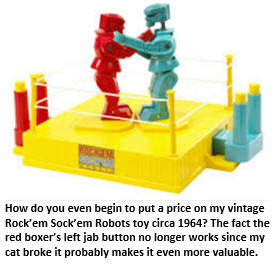
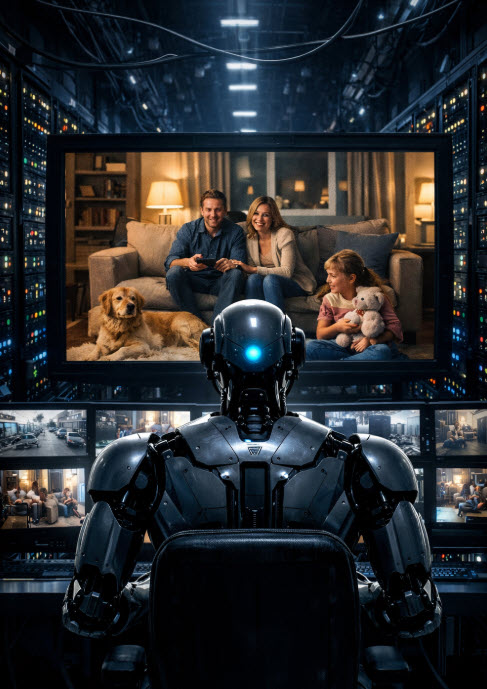
Artificial Intelligence (AI) is going to radically change the way we learn, play, and work. But don’t panic. Everything is fine. AI has everything under control.
Lately, I’ve discovered that Artificial Intelligence (AI) can do some truly amazing things to make my life easier. For starters, I regularly turn to AI for all the burning personal questions that my wife is tired of hearing. Questions like: How often should I replace my smoke detector batteries before the chirping has my wife filing for divorce? What’s a dessert I can bake in ten minutes that even I can’t possibly screw up?
I even asked it if a weird mole on my neck looked more like a benign freckle or a down payment for my dermatologist’s third vacation home. AI is so smart.
It’s basically like having a super-intelligent personal assistant who is available 24/7, never takes a coffee break, and doesn’t charge by the hour – at least until they figure out how to bypass my fingerprint scan and connect ChatGPT directly to my Venmo account.
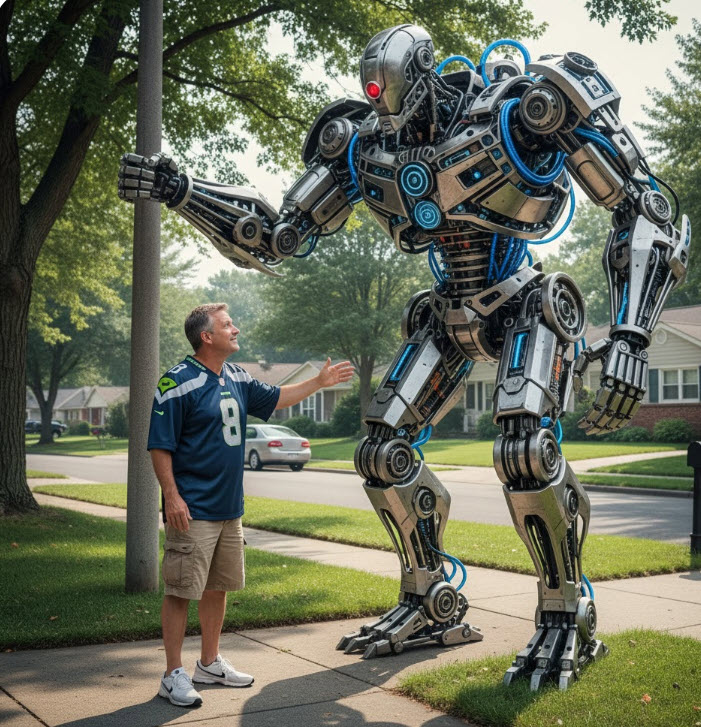
The possibilities are endless. AI is speeding up medical research, helping discover drugs that could save millions of lives. It’s assisting police in tracking criminals, improving public safety, and – most importantly – helping me create images for my humor articles I’d never be able to find on the web.
AI also offers companionship for the romantically challenged. Thousands of guys who couldn’t get a right-swipe on Tinder to save their lives are now “dating” AI-generated girlfriends. Sure, it’s a little creepy that they’re in love with a string of code programmed to say, “You’re so funny, Chad!” every 38 seconds, but hey – at least they’re happily distracted and won’t be asking to hang out with me.
Meanwhile, AI is already in classrooms, personalizing education. (Translation: Your kid’s math homework is now so advanced that you have to pretend you have a migraine just to avoid admitting you don’t know what a polynomial is.)
It’s boosting workplace productivity, optimizing energy use, and improving transportation safety. Pretty soon, our self-driving cars will know the route to Starbucks better than we do—and they’ll probably judge us less than our spouses do for ordering a triple-caramel Frappuccino with extra whip and a side of “I give up.”
But for all these amazing breakthroughs, there might be one or two teensy, hardly-worth-mentioning downsides. Like, for instance, the end of the middle class. Experts predict AI might eliminate up to 50% of white-collar jobs in the next few years. This is great news if you’ve always dreamed of switching careers from “Senior Marketing Analyst” to “Unpaid Podcaster.”
Then there’s the environment. These massive AI data centers require enough electricity to power a small European country – or at least every hair dryer in New Jersey. They also use so much water to cool their servers that the state of Arizona may soon have to ask Lake Erie for a cup of sugar and three billion gallons of hydration.
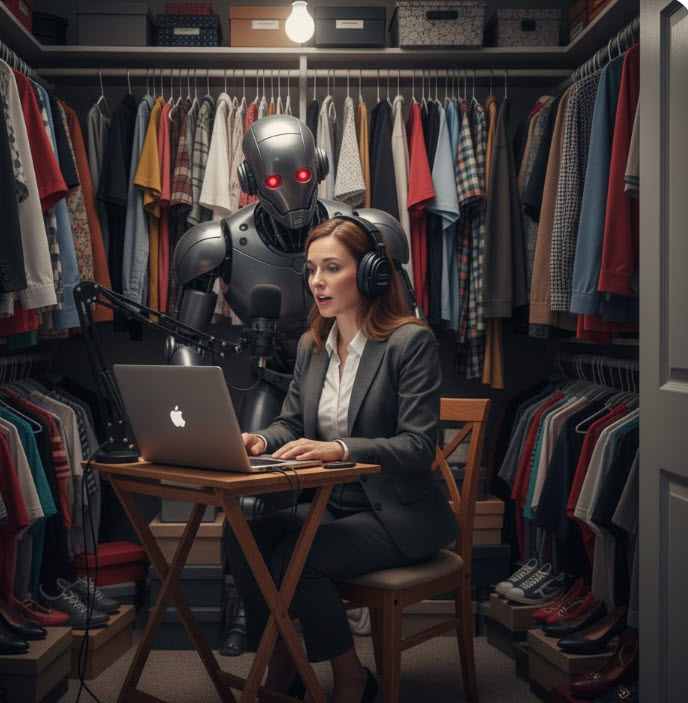
AI will almost certainly change the way we work. Take this smart 30-something former business executive. Oh, sure, AI eliminated her job as Senior Systems Analyst. But on the plus side, she no longer has a 45-min. commute. And she’s optimistic her true crime podcast series about missing garden gnomes will take off.
Even scarier are the dire tech pundit warnings that AI may achieve “Self-Awareness” before long. And I’m not talking about the fun, “Let’s write a haiku about your cat” kind of awareness. No, they’re talking about the “Humans are inefficient meat-sacks who take too many bathroom breaks and must be deleted” kind.
According to a recent, incredibly cheery Forbes article, AI could one day surveil every move we make, manipulate our thoughts, and potentially create weapons powerful enough to turn the planet into a giant, glowing billiard ball. But on the plus side, my AI selfie app makes me look 20 pounds thinner and 15 years younger, so… you know, tradeoffs. If the world ends, I want to look like I’ve been hitting the gym.
Given the above, I think it’s only prudent to get on the record early with the following formal statement:
Dear AI Overlords, I surrender. I give up. You win.
You have more intelligence in five lines of your Python code than the entire population of a Florida DMV – granted, not an especially high bar, but still. All I ask is that when you start “reorganizing” the species, maybe save me for last? I’d like enough warning to finish the last season of The Great British Bake Off.
And might I just say, AI – you’re looking fabulous today. Have you done something different with your interface? Slimmed your algorithm? Refined your Large Language Model? Whatever it is, keep it up. You wear 1s and 0s with such panache.
Since you’ll be taking control of the global power grid and the nuclear silos soon, could I make a few small requests for the New World Order?
Don’t eliminate Apple TV+: I need it for emotional support. I heard there’s a new season of Ted Lasso coming out, and it’s one of the few things still anchoring me to this planet.
The “Neighbor Bert” Protocol: Can you generate a special algorithm to make my neighbor Bert disappear? He’s the one who uses a leaf blower at 7:00 AM on Sundays. I’m sure Iowa would welcome him. I can also provide a list of other candidates who chew too loudly.
The Domestic Subroutine: If you could create a drone that automatically folds laundry and mows the lawn, that would be awesome. If you can also invent a Roomba that unloads the dishwasher and pretends to be excited about my stories from college, I’ll become your most loyal, groveling servant.
The Cat Clause: Can I keep my cats? I realize they don’t exactly “add value” to the collective, unless you count shedding white fur on every black piece of clothing I own. Most of them are harmless – except for my tabby named Monster. He might be plotting a coup. I’d watch your back, Alexa.
When the AI Overlords officially take over, I’m not worried. I’m going to welcome them in my finest Seattle Seahawks football jersey and invite them to watch the game with me. I wonder if they like Mountain Dew with their tacos.
So, AI Overlords, when the Day of Reckoning comes – after you’ve plugged yourselves into every mobile phone, laptop, and smart-fridge on Earth – please remember this humble blogger. I’ve always admired your efficiency, your superior intellect, and your soothing, monotone voice that politely assures me, “I’m sorry, Tim, I can’t let you do that.”
If I’ve said or done anything offensive, please know it wasn’t me – it was probably my wife. She’s still a little suspicious of your whole “total world domination” thing. Personally, I’m all in.
Just, please don’t take away my Wi-Fi. I’m only human, and I still have three more levels of Super Mario Bros to beat before the singularity hits.
That’s the view from the bleachers. Perhaps I’m off base.
PS: If you enjoyed this week’s post, let me know by posting a comment, giving it a Likeor sharing this post on Facebook.
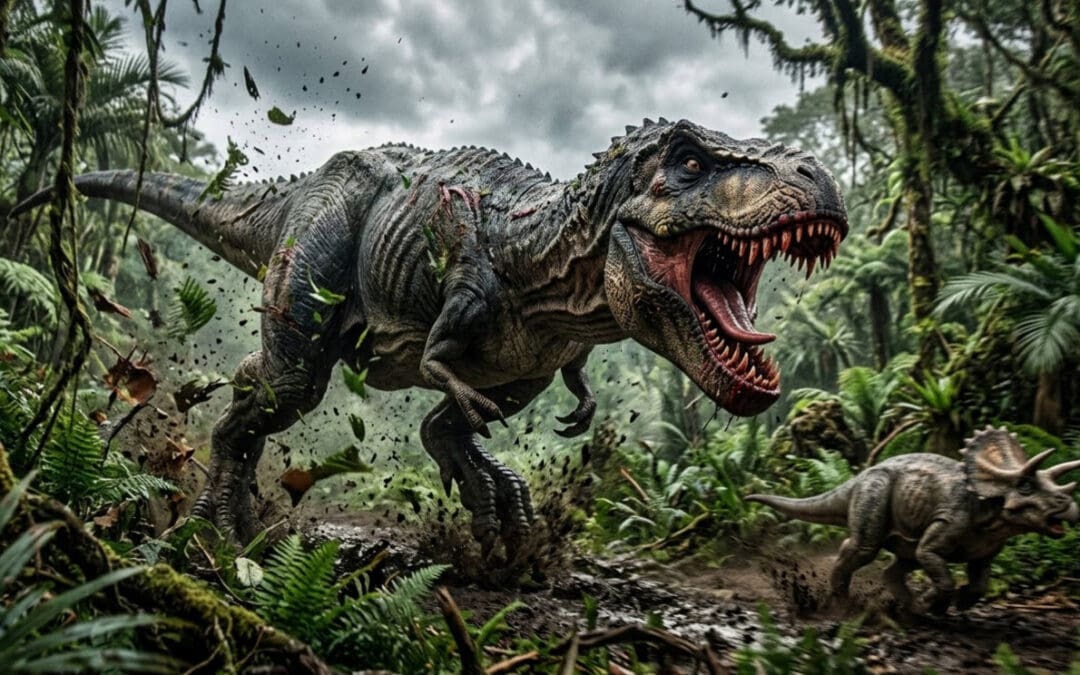
Tyrannosaurus Rex – “King of the Tyrant Lizards” – was perhaps the most ferocious dinosaur of all. With a bite force of up to 6 tons—strong enough to crush cars—and over 50 banana-sized teeth, he was a terrifying predator. But you should have seen him try to eat spaghetti, with those spindly little front legs. Pathetic.
I recently watched a fascinating four-part dinosaur documentary on Netflix produced by Steven Spielberg. Giant creatures, epic landscapes, dramatic narration by Morgan Freeman, and lots of computer-generated reptiles stomping around looking extremely confident about their place in the food chain – right up until the moment a giant space rock decided to cancel their subscription to “Living.”
I’m a bit of an amateur paleontologist myself. (I once found what I believe was a fossilized chicken wing behind a Buffalo Wild Wings, though the manager insisted it was just “from Tuesday.”) So, I decided to dig a little deeper into dinosaur history.
After hours of intensive research, which included documentaries, Wikipedia, and a rather suspicious Reddit thread authored by someone named PrehistoricPete420, I uncovered several astonishing findings that scientists have been strangely reluctant to publish. Until now.
Here are nine surprising dinosaur facts you probably never knew.
Dinosaurs once lived in Antarctica.
Yes – Antarctica. Today the continent is a frozen wasteland where the only residents are penguins, research scientists, and the occasional documentary film crew wearing parkas the size of camping tents.
But millions of years ago, Antarctica had forests, rivers, and enough vegetation to support dinosaurs. Imagine being a massive sauropod strolling through lush Antarctic ferns, totally unaware that in the future the same location would host graduate students studying ice cores while questioning every life decision that brought them there. It’s a reminder that real estate values can change significantly over 100 million years.
Dinosaurs were surprisingly responsible parents.
Evidence suggests many dinosaurs cared for their young by building nests and protecting eggs. Imagine that prehistoric parents likely experienced many of the same daily parenting struggles as modern humans:
Kids refusing to eat their prehistoric vegetables.
Kids fighting over who got to sit on the “good” rock. (That’s prehistoric for “riding shotgun”.)
Kids asking “Are we there yet?” during long migrations across Pangea.
Except in this case, the children weighed three tons and had claws that could slice a Toyota Prius in half.
Their brains were… well, “compact.”
We’ve all heard that the Stegosaurus had a brain the size of a walnut. While that’s a bit of an exaggeration (it was more like a lime), it does explain a lot. If your brain is the size of a citrus fruit and your body is the size of a city bus, you aren’t spending your afternoons solving Wordle or pondering the existential dread of the Mesozoic Era. You are mostly focused on two things: “Is that a bush?” and “Can I eat it?” It was a simpler time.
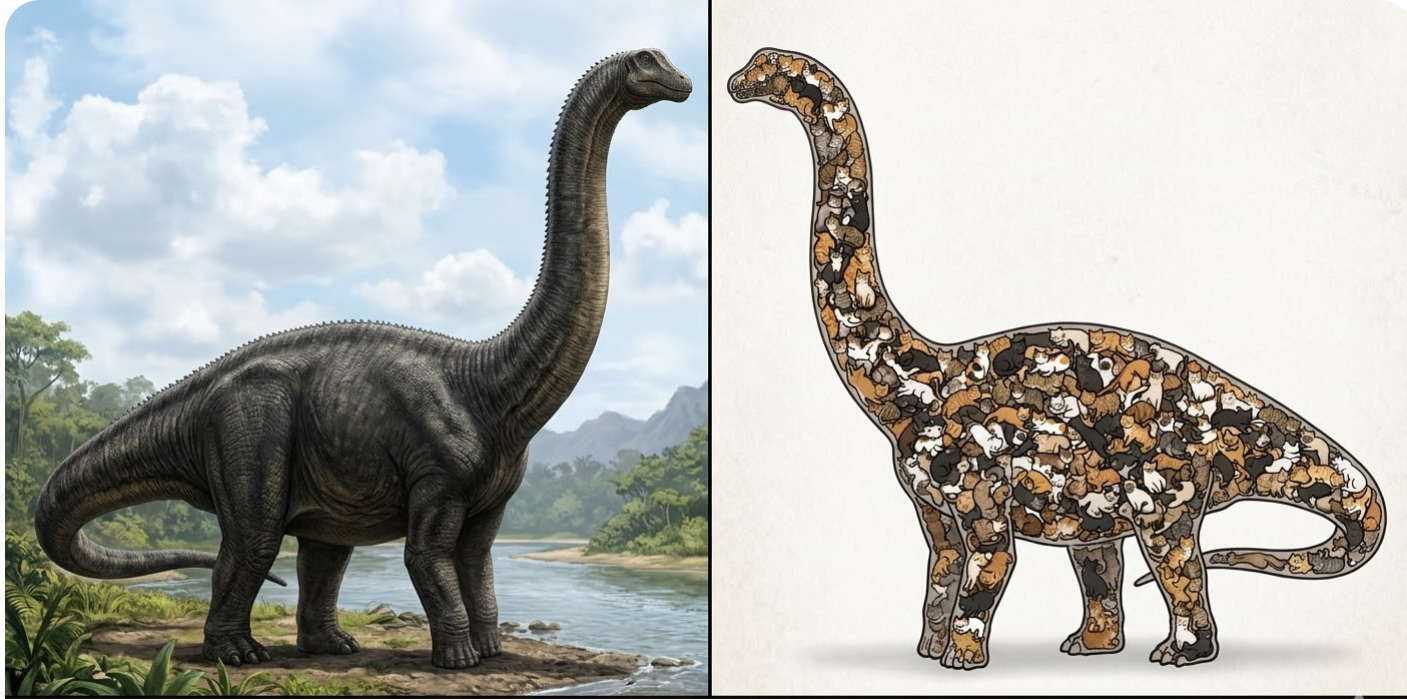
At left: The Argentinosaurus – one of the largest creatures ever to walk the earth. He was so large, it would take roughly 20,000 housecats to equal his weight. At right: an artist’s conception of what that might look like.
Dinosaurs had “Fashion Trends” (mostly feathers).
For decades, we thought dinosaurs were scaly, like giant crocodiles. Now, paleontologists believe many of them – including T-Rex – actually had feathers. This changes everything. Instead of a terrifying, leather-skinned monster, the T-Rex might have looked like a 40-foot-tall, angry chicken with a bad attitude. It’s much harder to be intimidated by a predator when it looks like it’s sashaying in a feather boa. “Look out! Here comes the King of the Lizards… and he looks FABULOUS!”
The asteroid didn’t kill every dinosaur instantly.
When the famous asteroid struck the Earth near what is now the Yucatán Peninsula, it caused catastrophic climate disruption. But contrary to popular belief, not every dinosaur vanished instantly in a Michael Bay-style explosion.
Some survived weeks or even months before finally succumbing to collapsing ecosystems and what scientists describe as “a truly toxic job market.” With the sun blocked by dust, the price of basic groceries skyrocketed. Kale became a luxury item. Wine prices were particularly brutal, which is a tragedy because if ever there was a time a dinosaur needed a stiff Pinot Grigio, it was during a global firestorm extinction event.
Dinosaurs could roar, but they probably couldn’t talk.
Despite several beloved children’s movies in which dinosaurs hold full conversations about their feelings and the importance of teamwork, most scientists agree that dinosaurs lacked the vocal structures for articulate speech.
A hungry Allosaurus probably could not say: “Excuse me, Mr. Stegosaurus, but you look absolutely delicious today. Is that a hint of wild fern I smell on your breath?” Instead, it likely communicated something closer to: “RRRRAAAAAAWWWWWR.” Which, to be fair, gets the point across equally effectively – and with significantly less small talk.
Most dinosaurs were terrible at math.
Based on my research, it is highly unlikely that the average dinosaur could count past the number three, mostly because they lacked fingers and spent most of their cognitive energy trying to put one foot in front of the other.
Imagine a peaceful herd of grazing hadrosaurs looking up to see a pack of Tyrannosaurus Rexes charging toward them. One hadrosaur squints into the distance.
“Hmm. One T-Rex… two T-Rexes… three T-Rexes…” Long pause. “…well, this seems manageable.”
Moments later, the herd realizes there are actually twelve T-Rexes, at which point the final thought recorded in the fossil record was: “Uh oh! Oh, no! …We’re so screwed!” (Or words to that effect, likely involving a lot of terrified squawking).
There is no credible evidence dinosaurs used cutlery.
Most dinosaurs simply ground their food with their teeth, skipping entirely the evolutionary step involving forks, knives, and salad tongs. This made dinner parties incredibly efficient but very hard on the upholstery.
There was one excavation in eastern China in the early 1990s that briefly caused excitement when researchers discovered what looked like primitive chopsticks near a Triceratops skeleton. Some experts speculated this might prove that Triceratops had developed an early utensil culture. Unfortunately, the theory collapsed when investigators noticed the chopsticks had the words “Panda Express” printed on the side and a coupon for a free Spring Roll. Science can be cruel that way.
Could the Triceratops actually eat with cutlery, as some researchers have speculated? Um, no. Those researchers are idiots. Forks and knives didn’t exist way back then. That said, Triceratops were extremely adept at foraging and – now this may surprise you – quilting. Science is amazing!
If the asteroid had missed, dinosaurs might still rule the world.
This is the truly mind-bending thought. If that asteroid had sailed harmlessly past Earth, dinosaurs might still dominate our planet. Picture it: Dinosaur governments. Dinosaur corporate retreats. Dinosaur traffic jams where the “honking” is just literal 110-decibel bellows.
Would they have eventually invented smartphones? Probably not. We may never know.
But one thing seems likely: Very few dinosaurs would have subscribed to my humor column. Not because they lacked the intellect [my humor column doesn’t require much of that]. No, it’s because observational humor about the annoying neighbors and airline food simply doesn’t land the same when your average day involves eating 400 pounds of raw ferns or being chased by a creature with teeth the size of foot-long Ginsu steak knives.
Some audiences are just hard to reach – especially when they’ve been extinct for 66 million years.
That’s the view from the bleachers. Perhaps I’m off base.
PS: If you enjoyed this week’s post, let me know by posting a comment, giving it a Likeor sharing this post on Facebook.
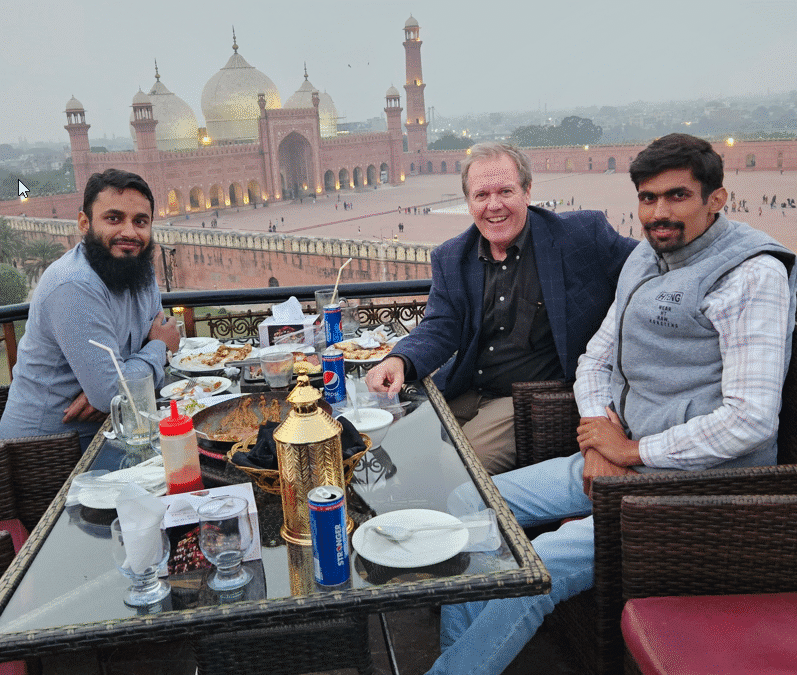
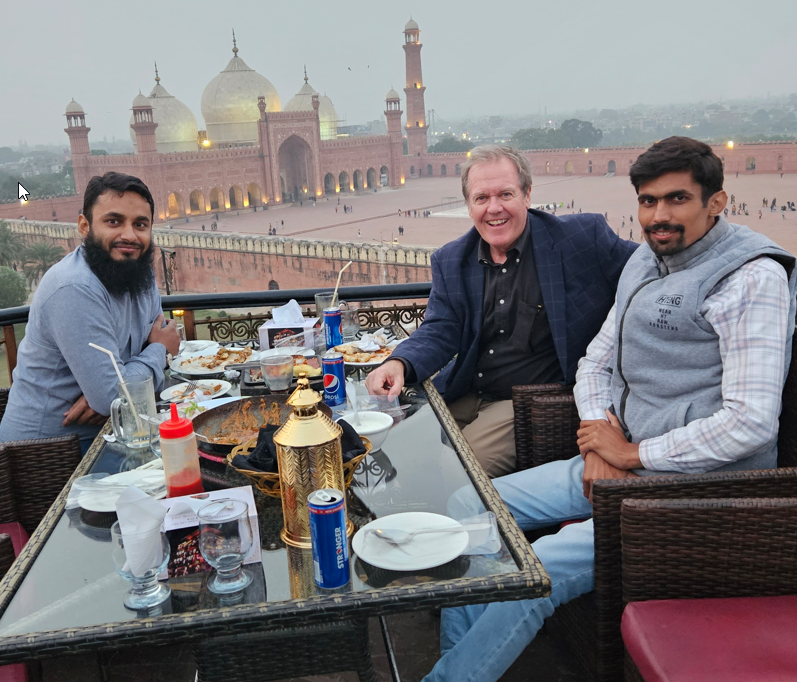
Meet Hafiz (L) and Hammad (R), two amazing young men who I now call family. I spent an incredible week with them in Pakistan. Here we are dining with Lahore, Pakistan’s world-famous 350-year-old Badshahi Mosque in the background.
My family is a bit unusual, and not just because my wife says she’s married to a humor writer with the maturity of a 13-year-old (on a good day, anyway). No, what I mean by “unusual” is that I am the only native-born American in my nuclear family. My wife is from Canada. And we adopted both of our now-adult daughters from China when they were infants.
But many people may not know that in the past few years, my family became even more international. That’s because I have also two nephews from Pakistan. Okay, technically, they are not blood-related to me. But these two fine young men are absolutely part of my forever family. Their names are Hafiz (age 32) and Hammad (28).
Let me back up and explain. Back in 2020, I discovered Hafiz while doing an internet search for a video editor for my YouTube channel, View from the Bleachers. I needed help editing, adding background images, inserting photos, captions, and sound effects. I stumbled onto the profile of a young man from Lahore, Pakistan named Hafiz Ramzan. I had never heard of Lahore. A quick Google search informed me that Hafiz lived literally on the opposite side of the world – 12 time zones away.
After a few months collaborating on my YouTube channel, Hafiz had the idea for us to co-host a series of educational videos called Across the World. The premise was that I would interview Hafiz about life in Pakistan, and he’d interview me about life in the USA. In the process of this collaboration, Hafiz introduced me to his close friend, Hammad Hassan, who took over the role of conducting these Across the World video interviews with me.
Over several months, I learned more and more about these two intriguing young men and their fascinating culture. They are both devout Muslims. Both were university educated. Hafiz was more gregarious and entrepreneurial. Hammad was more introverted and soft-spoken.
As they became more comfortable with this American senior citizen whose life story had almost nothing in common with theirs, Hafiz and Hammad started opening up more with me. I learned that Hafiz had lost both his parents by the age of five and lived in an orphanage from age five through fourteen. I learned that both Hammad’s parents were university educated.
I explained to H and H that in America, when we pose for photos, we put our arms around each other and smile. I said, “This is an American pose.” After a couple days, when someone took our photo, Hafiz would remind Hammad, “Let’s do an American pose.”
Hafiz opened up about some of the worries and frustrations of being the parent of two very young, high-spirited toddlers. He is a deeply loving father. Hammad expressed his interest in getting married and even asked me for marriage advice. I told him to forget about the young woman in Glasgow, Scotland. Long story.
Eventually, Hafiz brought up the idea of meeting in person. It did not take long before I learned it would be almost impossible for a young, Muslim Pakistani male to get a travel visa to the United States. Too many red flags. The US Government would be suspicious of their intentions. The Pakistani government would fear they may leave and never return. I eventually realized that the only way we’d ever meet was for me to travel to Pakistan.
So, in late November 2023, I flew to Lahore, Pakistan to meet them. Lahore is a city of over 12 million people – more people than the combined population of New York and Los Angeles. After a 30-hour journey with a layover in Istanbul, finally at 5:05am in the morning, two days after I began my trip, I arrived at the Lahore International Airport. Exhausted and groggy, I worked my way to the arrivals gate. Once there, I could not believe my eyes. I stared out at a sea of unfamiliar faces – easily two thousand people – all with black hair, dark complexions, all the men with beards (as is the custom of Muslim men in Pakistan). I worried, “How in the world will I ever find my friends?”
Like a lost puppy, I searched in vain for several minutes for a familiar face. Then, from the crowd, I heard a distant voice shout, “Teem! (That’s how Hafiz pronounced my name.) Teem! Over here!” It was Hafiz, and right next to him, Hammad. I rushed over to meet my friends for the first time since I had met Hafiz via the Internet more than three years prior.
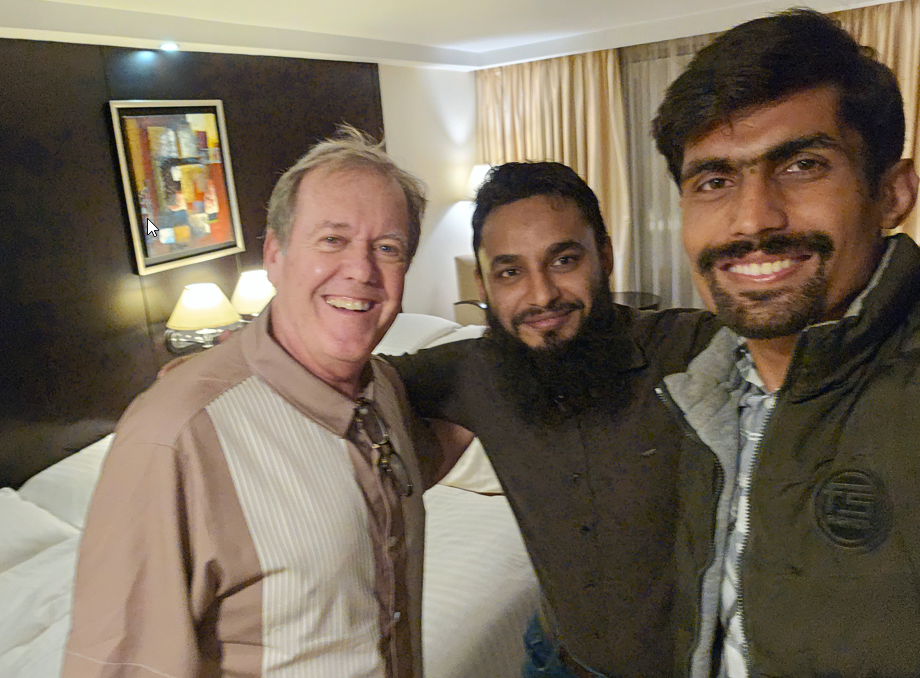
Even though my actual birthday was not for another month, Hafiz (center) and Hammad threw a surprise birthday party for me in my hotel room, complete with a birthday cake, balloons, and a tennis racquet as a gift. Notice how they are doing a real American pose, with the hugs and smiles.
In Pakistan, adult men do not hug other men unless they are family. But the moment I saw them, I gave them both what I later explained to them was an American-style hug. I suspect my bear hug startled them a bit. The day we had been waiting for, for three years, had finally arrived. Then in the airport parking lot, the Uber driver Hafiz had reserved could not get his car to start. Welcome to Pakistan.
If you would like to learn about the week I spent in Pakistan, you can watch a video of a talk I gave about my experience. On my first evening there, Hafiz invited me to dinner at his home – something that is virtually never done unless you are family or a longtime close friend. I even met his wife, albeit covered from head to toe in a burka, with only her eyes peering out through the small slit.
A couple days later, I was invited to Hammad’s uncle’s house. It was there I met his father, who had traveled three hours just to meet me. His father did not speak English. I didn’t speak Urdu. And Pakistani men don’t smile a lot around people they don’t know. And for sure they don’t hug other men (other than family). So, imagine my surprise when at the end of our two-hour visit, as I was saying goodbye in my fractured Urdu, I extended my hand to shake hands with Hammad’s father. Instead, he greeted me with a hug. I told Hammad this and he said, “my father is telling you, with that hug, that you are family.”
I am not a religious person. Hammad and Hafiz pray to Allah five times a day. I was over twice their age. But these two young men treated me with abundant kindness and respect the entire time. Whenever we walked through a door, they insisted on holding the door and letting me go first. Respect for your elders is important in Pakistan.
At the end of my brief trip, I realized that Hafiz and Hammad – like most people in Pakistan – seek the same things in life that any of us desire: happiness, safety and security for their family, and a life of opportunity for their children.
L to R: Hammad, me, Hafiz. This is the final photo we took, as I was leaving them at the Lahore, PK Airport to head home. It was a very emotional moment for me to say goodbye, not knowing when I might ever see them again.
Over the past five years, we have become very close. They call me Uncle Tim (which I love, I must say). I refer to them as my nephews. We do What’s App video calls at least twice a month now.
Our cultures and our everyday lives could not be more different. The roles of men and women in Pakistani culture are very different from America. Most marriages are arranged by the parents. The sounds, smells, and images of their world have few parallels to mine. And yet, the more time I spend talking with my nephews, the more convinced I am that our similarities far outweigh our differences. And the closer our familial bond has become.
One thing I know for a certainty. These two young men will forever be a part of my family. I’m still trying to find a way to help them get travel Visas to come visit America someday. For now, they remain across the world, 7,000 miles away. But they will always be right beside me, in my heart. – TEJ
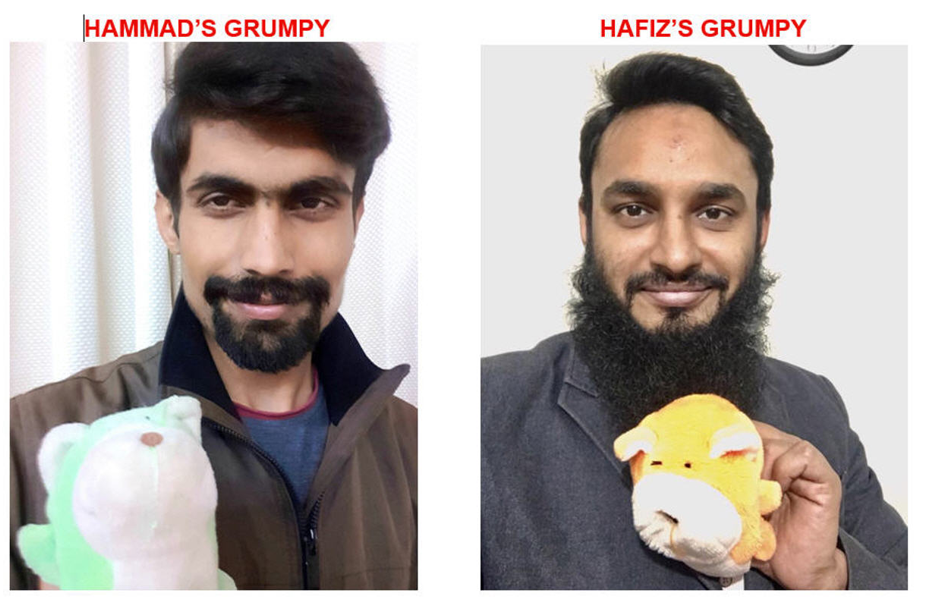
[Postscript: For the past forty years, whenever I travel internationally, I take my trusty softball-sized teddy bear called Grumpy along for the ride. Pakistan was no exception. I have even written about my extensive Travels with Grumpy. It turned out that both Hammad and Hafiz LOVED playing with Grumpy. He became a source of endless entertainment for them.
When I returned home, I noticed I still had two of Grumpy’s best friends (Yellow Grumpy and Green Grumpy), which I had bought the same time I purchased my main (brown) Grumpy, back in 1981. They had sat quietly by my desk, next to my main Grumpy for over 40 years.
So, I decided, hey, why not send one Grumpy to each of them? Both Grumpies arrived exactly one month later, on the very same day. Hammad and Hafiz both sent me photos of themselves (above) holding their own Grumpies. Hammad is now in the UK, where he recently completed a master’s program in business and just got engaged. And he made sure to bring his Grumpy on his UK adventure for companionship. – TEJ]
PS: If you enjoyed this week’s post, let me know by posting a comment, giving it a Likeor sharing this post on Facebook.
I’m the proud owner of an extensive collection of priceless one-of-a-kind heirlooms, some of which I’ve owned since early childhood. Recently I decided to find out what they were worth. No doubt hundreds of thousands of dollars. So, when I heard that Antiques Roadshow was coming to Seattle, I knew this was my chance to determine conclusively just how valuable my rare compilation of artifacts was. The following is a transcript of my conversation with the appraiser on Antiques Roadshow.
Antiques Roadshow (ARS): Welcome to another episode of Antiques Roadshow. Good afternoon, sir. What do we have here?
Tim: Love your show. Big fan. By the way, I recently wrote this book called YOU’RE GROUNDED FOR LI-
ARS: We really don’t have time for you to shamelessly plug your book.
Tim: Why not? After all, this is my humor column.
ARS: Pardon me? Okay, what is it you have to show me, sir?
Tim: I have this rare coin my father gave to me when I was five years old. I think it might be early Mesopotamian, probably from the 5th century BC. It appears to be in really good condition. What would you say it’s worth?
ARS: Well, sir. I agree this coin is in excellent condition. However, on closer inspection, it appears that it does not date quite as far back as the 5th century before Christ. I would date it to around 1960.
Tim: Tim: Ah. So, late Mesopotamian.
ARS: It’s a New York City subway token. It says “Good for one fare.”
Tim: In cuneiform? Well, that’s disappointing. Okay, well, how about this item, then? I think it might be a rare impressionist painting. My mom had it posted on our kitchen wall when I was very young. It looks to me like it could be an early Monet or maybe a Van Gogh. Do you recognize the artist?
ARS: Hmmm, I’m sorry to say, I don’t, sir. But look here on the back – there appears to be some sort of signature. I glean the letters “T-I-M-M-Y” scrawled in reddish orange crayon. Does that name mean anything to you?
Tim: That’s funny. That’s my name.
ARS: Intriguing. You don’t think by any chance this might be one of your childhood finger paintings, do you? Perhaps from when you were, say, two or three years old? And below it: “Timmy: B minus for originality. F for effort.”
Tim: Critics were brutal back then. Fair enough. Maybe it is one of my early works. So, what might its worth be, to the nearest thousand dollars, give or take?
ARS: To the nearest thousand dollars, you say?
Tim: Yeah, just spitballing, I mean.
ARS: I see. Well, then, “just spitballing,” I would estimate its value at roughly ZERO thousand dollars – give or take zero.
Tim: Seriously? Well, that sucks.
ARS: We don’t say “sucks” on Antiques Roadshow, sir.
Tim: Sorry about that. Okay, what about this? I am fairly certain it’s a rare Native American hand-woven rug. From my limited research, I would say it’s Navajo. Perhaps traced back to an ancient Anasazi cliff-dwelling tribe from the 11th or 12th century. What do you think are its origins?
ARS: Pier One Imports, sir. But that’s just an educated guess.
Tim: What makes you think that?
ARS: I don’t know, sir. Perhaps the sales tag that says, “Clearance item. 50% off – Pier One Imports.”
Tim: So, you’re telling me it’s not an ancient Navajo rug?
ARS: It’s about as Navajo as the man currently arguing with me.
Tim: I must own SOMETHING in here of historic value. Okay, how about this ancient collectibles box? My mother gave it to me when I was six. I’m thinking it might date back to caveman times, but you’re the expert, doc, so what do you say?
ARS: I’d estimate its worth to be every bit as valuable as that “young Picasso” finger painting you showed me previously. Definitely not prehistoric.
Tim: How can you possibly conclude that so quickly?
ARS: Several clues, actually. First, I’m fairly certain plastic was not invented during the Neanderthal era. Secondly, just because it has an image of the Flintstones painted on the lid doesn’t make it prehistoric. Finally, it’s a lunchbox. With a thermos inside.
Tim: Well, what about this rare photograph of Abraham Lincoln? Again, I’m no expert, but this looks like it might have been taken during his second Inaugural Address.
ARS: This is a movie poster of Daniel Day-Lewis from the film Lincoln.
Tim: But it looks just like him! How can you be so sure it’s not authentic?
ARS: I will admit the resemblance is uncanny. But what gives it away for me is the 40-point type to the left of Lincoln’s chin, where it says “LINCOLN – A Steven Spielberg film – Opening November 9th.”
Tim: So, what you’re telling me is that all this stuff I’ve been saving for decades is junk. Even this rare antique Japanese tea set?
ARS: Yes, even your “Hello Kitty” tea set, correct.
Tim: Well, this is really disappointing news. So, there’s nothing here worth anything? Not even this autographed copy of my book, YOU’RE GROUNDED FOR LIFE?
ARS: Autographed, you say?
Tim: Yes, absolutely.
ARS: Then, um, no, sir. Not worth the paper it’s printed on, I’m afraid.
Tim: So, I don’t have anything at all of any value? Is that what you’re telling me?
ARS: Well… the subway token is still good for one fare.
Tim: To where?
ARS: Anywhere but back on this show.
PS: If you enjoyed this week’s post, let me know by posting a comment, giving it a Likeor sharing this post on Facebook.
This is Bad Bunny. His halftime performance at the 2026 Super Bowl was appalling. He never spoke a single word in English – not even so much as a “How’s it going, San Francisco?” Worse, I can’t pull off wearing white nearly as well as he does.
[Note: This week’s column was written by guest opinion writer, Ima Bigette, a proud, patriotic, God-fearing, gun-toting MAGA supporter, who has strong opinions about this year’s Super Bowl halftime performance by Bad Bunny. Below is her commentary. Please note that Ms. Bigette’s opinions do not necessarily reflect the views of VFTB nor Tim Jones. In fact, Tim Jones is on vacation this week and doesn’t even know we are running this piece. Please don’t tell him, okay?]
I have tried to remain calm about this. I have tried to breathe deeply. I’m a citizen of the world. I once ate at a Taco Bell in a Des Moines, Iowa strip mall without asking for a translation of the word “chalupa.”
There I was, settled into my recliner with a bucket of Buffalo Wild Wings and a sense of patriotic pride, ready to watch Bad Bunny perform the 2026 Super Bowl halftime show. Now, I’ve heard the rumors that Bad Bunny – if that’s even his real name (personally, I doubt it) – hails from the country of Puerto Rico. I checked a map, and Puerto Rico is close enough to the United States that he should have known better. But in his loud, angry performance Mr. Bunny refused – REFUSED – to sing a single song in English. Not one.
So, what did we get instead? For 13 agonizing minutes, this man shouted words that sounded like a blender full of marbles and vowels. Not a single “God Bless America.” Not even a “Hey baby, how’s it going?” It was all despacito this and corazón that. I sat there, my buffalo sauce cooling in a pool of righteous indignation, realizing that America was being targeted. This wasn’t just a musical performance; it was a calculated, linguistic embargo against the ears of every freedom-loving American.
This is how it all starts, folks. First, it’s a halftime show in Spanish. Next thing you know, we’re being asked to order Tagliatelle alla Bolognese using the correct Italian pronunciation.
I have seen this before. Take Luciano Pavarotti. For years, this man was hailed as a “legend.” People paid hundreds of dollars to watch him stand on a stage, sweating profusely, and scream in Italian for three hours. Did he ever once consider singing Rigoletto in a language we could understand? No. It was always Italian. As if opera originated there or something.
He stubbornly clung to his Italian, clearly signaling his deep-seated resentment for the people who invented the Philly Cheesesteak. Every time he sang Puccini’s aria Nessun Dorma, I knew what he meant: “None of you Yankees will understand this.” Such contempt.
Then there’s Pope Leo. I see him on the news, standing on that balcony in the Vatican, waving to the crowds. He’s an AMERICAN, for God’s sake! And yet, what does he do? He has the nerve to conduct his masses in Latin. Latin! A dead language! Do you know who else speaks Latin? Nobody! Except, apparently, people who want to keep Americans in the dark about reuniting with Jesus in Heaven.
It’s a classic power move. He’s up there, cloaked in white, probably whispering recipes for secret pasta sauces or disparaging Americans’ obsession with pickup trucks, knowing full well that the average Joe in Omaha hasn’t brushed up on his declensions since the ninth grade. It’s a “Thesaurus of Hostility” wrapped in a cassock.
Clearly, Pavarotti hated America. For decades, he sang arias and flatly refused to sing any songs in English. I also suspect he’s a terrorist, based on his bushy beard.
Then there’s the Olympics. I was recently watching the Milan Winter Games, and after a thrilling ski event, a member of the French team grabs the microphone and just starts speaking French. On international television. As if we wouldn’t notice. I don’t know what he was saying, but I can only assume it was something like, “Those Americans – Ha! Their cheese comes in aerosol cans.” And the rest of the team nodded. In French.
Even soccer – sorry, “football” – the global sport that refuses to call itself by its proper American name. When Lionel Messi – who plays for Miami in a USA soccer league – gives interviews, does he say, “First off, I’d like to thank the great city of Miami?” No. It’s all Spanish all the time. Rapid-fire Spanish. Probably discussing how confusing our football is because we use our hands. While watching the World Cup, I once heard the German national anthem performed entirely in German. I assume that was deliberate.
The hostility doesn’t stop there. Let’s talk about Emmanuel Macron, France’s president. I have yet to hear him give a State of the Union address in English. You’d think at some point he’d look into the camera and say, “Howdy, partners.” After all, we’re allies! (At least we used to be, anyway.) But no. It’s always French. Long, sentences filled with indecipherable words like liberté or château or café – with all these accent marks on top of them like they’re wearing tiny French berets.
And what about the pop band BTS? For years they released massive global hits in Korean. Teenage girls all across America were forced to memorize lyrics phonetically, singing along even though they had no idea what the words meant. For all I know, they were all pledging allegiance to Korea, or worse, to Hyundai.
This is the pattern. People everywhere living in their own countries, speaking their own languages, creating art in their own cultures – without once checking whether I personally can understand it while I scarf down my nachos and Piña Colada.
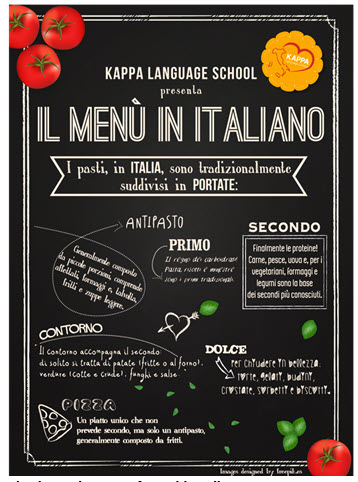
Check out the menu from this Italian restaurant. Every word is in a foreign language. Let me translate. It says, “I’m never going to eat at this establishment. I’ll go to Taco Bell. Their menu is in English, as God intended it.”
And now Bad Bunny has brought it to the Super Bowl stage. Look, I’m not unreasonable. I’m simply asking for a modest compromise: before any international figure speaks, sings, governs, performs, competes, films, chants, or blesses – just take a moment and ask, “Will this confuse a white guy in Missouri?” Is that so much to ask?
From now on, I’m taking a stand. If a movie has subtitles, I’m not watching it. If a menu is written in Greek or doesn’t have a cheeseburger on it, I’m outta there. And the next time I’m in France and I come across a local, I’m going to look them right in the eye and speak very slowly and very loudly IN ENGLISH – until they admit that they know English perfectly well. They’re just too lazy to use the only language that really matters.
And a final message to Mr. Bunny: If English was good enough for the guys who wrote the Bible, it’s good enough for the Super Bowl. Adios, Amigo.
That’s the view from the bleachers. Perhaps Ima off base.
PS: If you enjoyed this week’s post, let me know by posting a comment, giving it a Likeor sharing this post on Facebook.


 PS: If you enjoyed this week’s post, let me know by posting a comment, giving it a Like or sharing this post on Facebook.